
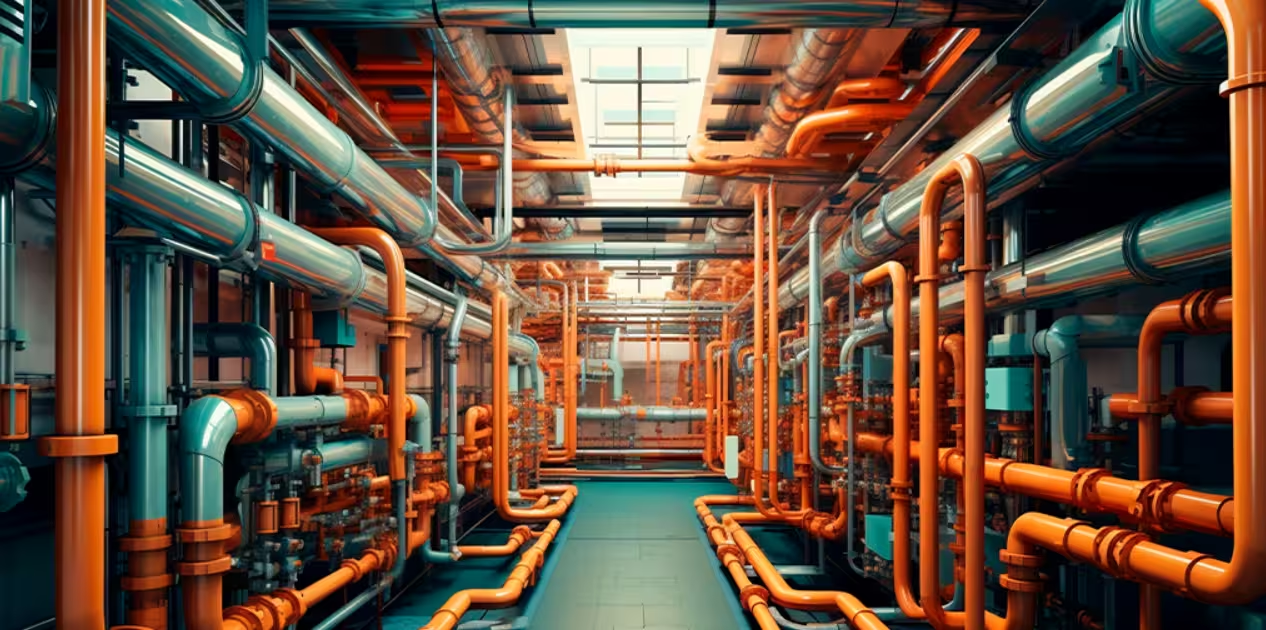
Mechanical, Electrical & Plumbing (MEP) Services
Perfect Solution Contracting provides integrated Mechanical, Electrical and Plumbing (MEP) services for the operation, maintenance, repair, refurbishment, and technical support of building systems and facilities.
MEP systems form a major part of a building's technical infrastructure. They support indoor environmental conditions, electrical power distribution, lighting, water supply, drainage, ventilation, equipment operation, and many other functions required for normal facility operation.
Within facility management, MEP services extend beyond installation. They can include planned preventive maintenance, corrective maintenance, inspections, testing, fault diagnosis, asset management, work-order management, technical reporting, and coordination between interconnected building systems.
Maintenance activities are planned according to the installed equipment, manufacturer recommendations, asset condition, operational requirements, approved maintenance procedures, statutory requirements where applicable, and the agreed facility-management scope.
Integrated MEP Facility Management
Mechanical, electrical, and plumbing systems are closely interconnected. A fault in one system can affect the operation or performance of another system, making coordinated maintenance important for complex facilities.
Integrated MEP management helps coordinate inspections, maintenance activities, shutdowns, technical resources, spare parts, specialist contractors, and maintenance records across the building's technical assets.
Mechanical Services
Mechanical services can include the operation and maintenance of HVAC systems, pumps, ventilation equipment, water systems, pressurisation systems, mechanical plant, and other building-service equipment according to the installed systems.
Maintenance requirements vary according to equipment type, manufacturer, operating hours, duty, environment, asset condition, and the criticality of the system.
HVAC Operation & Maintenance
Heating, Ventilation and Air Conditioning (HVAC) systems support indoor temperature, ventilation, humidity control where applicable, and indoor environmental conditions.
HVAC maintenance can include chillers, air handling units, fan coil units, packaged units, split systems, ventilation fans, pumps, cooling towers where installed, controls, valves, filters, ductwork, and associated equipment.
Chiller Maintenance
Chillers require maintenance appropriate to the chiller type, operating conditions, refrigerant circuit, controls, compressors, heat exchangers, pumps, and associated chilled-water system.
Routine maintenance can include operating-data review, alarm investigation, inspection, cleaning activities, electrical checks, water-side coordination, and other manufacturer-recommended tasks.
Air Handling Units
Air Handling Units (AHUs) can require inspection and maintenance of filters, coils, fans, motors, belts, bearings, dampers, drain pans, condensate systems, controls, sensors, and other installed components.
Maintenance requirements should reflect the equipment configuration and indoor-air requirements of the facility.
Fan Coil Units
Fan Coil Units (FCUs) can require filter cleaning or replacement, coil inspection, condensate drain checks, fan and motor inspection, valve checks, thermostat or controller checks, and investigation of noise, leakage, or temperature complaints.
Access requirements should be considered when FCUs are installed above ceilings or within concealed areas.
Ventilation Systems
Ventilation systems can include supply fans, exhaust fans, fresh-air systems, extract systems, ductwork, dampers, grilles, louvers, controls, and associated components.
Maintenance can include inspection, cleaning, mechanical checks, electrical checks, airflow-related observations, and corrective work according to the installed system.
Pumps & Pumping Systems
Buildings can contain chilled-water pumps, domestic water pumps, booster pumps, drainage pumps, sump pumps, transfer pumps, and other pumping equipment.
Pump maintenance can include inspection for leakage, abnormal noise, vibration, bearing condition, seals, couplings, alignment where applicable, motor condition, electrical connections, controls, and operating parameters.
Mechanical Plant Rooms
Mechanical plant rooms should remain accessible, organised, and suitable for the safe operation and maintenance of installed equipment.
Routine inspections can identify leakage, abnormal equipment condition, damaged insulation, housekeeping issues, access restrictions, unusual noise, and other maintenance observations.
Pipework & Valves
Mechanical and plumbing systems contain pipework, fittings, valves, strainers, flexible connections, supports, insulation, and other components requiring periodic inspection.
Maintenance can include leakage checks, valve operation where appropriate, support inspection, insulation observations, and repair or replacement of defective components according to the system requirements.
Mechanical Insulation
Insulation can be used on chilled-water piping, ductwork, equipment, and other systems to control heat transfer and, in suitable applications, help manage surface condensation.
Damaged, wet, missing, or deteriorated insulation should be assessed and repaired using materials and vapour control appropriate to the system.
Electrical Services
Electrical facility maintenance can cover the building's power-distribution systems, switchboards, distribution boards, lighting, wiring accessories, standby-power equipment, earthing, controls, and associated electrical infrastructure.
Electrical work should be performed by appropriately qualified personnel and coordinated with the applicable isolation, permit, testing, and safety procedures.
Low-Voltage Distribution Systems
Low-voltage distribution can include main switchboards, sub-main distribution boards, panelboards, protective devices, feeders, cables, busbars, and associated electrical equipment.
Maintenance requirements depend on the equipment, manufacturer instructions, loading, environmental conditions, operational criticality, and approved maintenance programme.
Electrical Panels
Electrical panel maintenance can include visual inspection, cleaning under appropriate conditions, checking for signs of overheating or deterioration, mechanical and electrical observations, labelling review, and testing where required.
Any intrusive inspection or maintenance should follow the required isolation and electrical-safety procedures.
Circuit Breakers & Protective Devices
Circuit breakers and protective devices are important components of the electrical distribution system.
Inspection, operation, adjustment, or testing should be carried out according to the equipment type, manufacturer requirements, approved settings, and applicable maintenance procedures.
Electrical Cables & Connections
Electrical maintenance can include inspection of visible cable condition, terminations, supports, containment, identification, and other accessible components.
Loose or deteriorated electrical connections can create operational and safety concerns and should be addressed using appropriate electrical procedures.
Lighting Systems
Lighting maintenance can include internal and external luminaires, drivers, lamps where applicable, switches, contactors, controls, sensors, timers, and associated electrical components.
Maintenance can include fault diagnosis, replacement of defective components, cleaning, operational checks, and coordination with lighting-control systems.
Emergency Lighting
Emergency lighting and exit-sign systems require inspection and testing according to the installed system, approved maintenance procedures, and applicable requirements.
Systems may use self-contained emergency luminaires or a central battery arrangement depending on the building design.
Uninterruptible Power Supply Systems
Uninterruptible Power Supply (UPS) systems provide battery-backed electrical support to connected loads during certain supply disturbances and interruptions, subject to the UPS design and available battery runtime.
UPS maintenance can include inspection of alarms, batteries, bypass arrangements, cooling conditions, electrical connections, operating parameters, and other manufacturer-recommended items.
Diesel Generator Coordination
Standby generators can support selected building loads following loss of normal power according to the approved standby-power design.
MEP maintenance can coordinate generator operation with Automatic Transfer Switches (ATS), distribution boards, UPS systems, fuel systems, controls, and other elements of the standby-power architecture.
Earthing & Bonding
Earthing and bonding form part of the electrical safety and protection arrangements of a building.
Inspection and testing should be carried out according to the system design, approved procedures, and applicable project or regulatory requirements.
Plumbing Services
Plumbing maintenance can cover domestic water supply, drainage, sanitary fixtures, water pumps, storage tanks, valves, pipework, and other building water systems according to the installed infrastructure.
Routine inspections help identify leakage, blockage, pressure issues, damaged fixtures, defective valves, unusual pump operation, and other conditions requiring corrective action.
Domestic Water Systems
Domestic water systems can include storage tanks, transfer pumps, booster systems, distribution piping, isolation valves, pressure-control equipment, and plumbing fixtures.
Maintenance requirements depend on the building design, water source, equipment, operating conditions, and applicable water-system requirements.
Water Pumps
Water-pumping systems can require inspection of pumps, motors, pressure vessels where installed, control panels, sensors, valves, piping, and associated components.
Fault diagnosis can consider pressure, flow, electrical supply, controls, pump condition, leakage, and the operating sequence of the system.
Water Storage Tanks
Water tanks should be managed according to their function, construction, water-service requirements, and applicable inspection and cleaning procedures.
Maintenance observations can include visible leakage, access condition, covers, valves, level-control components, associated pumps, and other accessible system elements.
Plumbing Fixtures
Plumbing fixture maintenance can include taps, mixers, wash basins, toilets, urinals, flushing devices, flexible connections, traps, and other sanitary components.
Corrective maintenance can address leakage, blockage, damaged components, defective flushing mechanisms, and other operational problems.
Drainage Systems
Building drainage systems can include waste and soil piping, floor drains, cleanouts, traps, sump systems, drainage pumps, and associated components.
Maintenance can include inspection, blockage response, cleaning where required, leakage repair, pump maintenance, and investigation of recurring drainage problems.
Drainage Blockage Response
Drainage blockages should be assessed according to their location, severity, affected fixtures, accessibility, and the configuration of the drainage system.
Repeated blockages may require further investigation rather than repeated local clearing alone.
Water Leak Investigation
Water leakage can originate from plumbing, drainage, mechanical systems, equipment, waterproofing, or other building elements.
Effective corrective maintenance requires identifying the likely source before completing final architectural reinstatement of ceilings, walls, or finishes.
Planned Preventive Maintenance
Planned Preventive Maintenance (PPM) schedules routine maintenance activities according to defined intervals, operating requirements, asset condition, manufacturer recommendations, and facility priorities.
A structured PPM programme can support equipment reliability, systematic inspection, maintenance planning, and early identification of developing defects.
Preventive Maintenance Scheduling
Maintenance frequencies should be established according to the specific equipment rather than applying the same interval to every MEP asset.
Schedules can consider operating hours, duty, asset criticality, equipment condition, manufacturer guidance, statutory requirements where applicable, and historical maintenance data.
Corrective Maintenance
Corrective maintenance addresses faults and defects identified through inspections, alarms, occupant requests, breakdowns, or preventive-maintenance activities.
Work can include fault diagnosis, component repair, replacement, adjustment, testing, and restoration of the affected system according to approved procedures.
Breakdown Maintenance
Unexpected equipment failures require an organised response based on safety, system criticality, operational impact, available redundancy, access, spare parts, and technical resources.
Breakdown records can also support analysis of repeated failures and future maintenance planning.
Fault Diagnosis
MEP fault diagnosis should consider the complete system rather than replacing components without identifying the underlying condition.
Depending on the system, diagnosis can involve visual inspection, measurements, control signals, alarms, operating history, equipment condition, and other technical information.
Root Cause Analysis
Repeated or significant equipment failures may require further analysis to identify contributing conditions such as operating environment, loading, control issues, installation condition, maintenance history, or related system faults.
Root-cause analysis can support more appropriate corrective action and help reduce recurrence where the underlying cause can be identified and addressed.
Condition-Based Maintenance
Condition-based maintenance uses available equipment condition information to support maintenance decisions rather than relying only on fixed calendar intervals.
The applicable techniques depend on the asset and can include operating measurements, inspection findings, alarms, temperature observations, vibration data, or other equipment-specific indicators.
Predictive Maintenance Support
Selected critical assets may benefit from predictive or condition-monitoring techniques where appropriate technology, baseline data, and technical expertise are available.
Predictive maintenance should complement rather than automatically replace required preventive maintenance, inspection, and manufacturer-recommended servicing.
Thermal Inspection
Thermographic inspection can support condition assessment of selected electrical and mechanical equipment by identifying unusual temperature patterns under suitable operating conditions.
Findings require appropriate technical interpretation and should be considered together with equipment loading, ambient conditions, inspection limitations, and other diagnostic information.
Vibration Monitoring
Vibration monitoring can be used for selected rotating equipment such as pumps, motors, and fans where appropriate.
Measurements and trends can support assessment of equipment condition, but interpretation should consider the machine type, operating state, baseline condition, and applicable technical criteria.
Building Management System Coordination
Building Management Systems (BMS) can provide monitoring and control information for selected HVAC, electrical, water, and other connected building systems.
BMS alarms, trends, schedules, temperatures, status points, and other available data can support facility maintenance and fault investigation.
BMS monitoring does not replace physical inspection, equipment-specific maintenance, or dedicated protection and control systems.
Controls & Sensors
MEP systems can use temperature sensors, pressure sensors, flow switches, level sensors, thermostats, actuators, controllers, and other control devices.
Faulty or inaccurate control components can affect equipment operation and should be investigated as part of the overall system rather than in isolation.
Energy Monitoring
Available electrical, HVAC, water, and BMS data can support monitoring of energy and utility consumption where suitable metering and system information are available.
Observed changes can be reviewed alongside occupancy, operating schedules, weather, equipment condition, and facility requirements before conclusions are made about system performance.
Asset Register Management
An MEP asset register provides structured information about maintainable equipment within the facility.
Asset records can include equipment identification, location, manufacturer, model, serial number, system, maintenance requirements, criticality, and other relevant information where available.
Asset Criticality
MEP assets can be classified according to their operational importance and the consequences of failure.
Criticality can help prioritise preventive maintenance, spare parts, response planning, redundancy review, and replacement planning.
Equipment Condition Assessment
Condition assessments can support maintenance and lifecycle decisions by documenting the observed physical and operational condition of MEP assets.
Assessments can consider age, maintenance history, defects, operating condition, obsolescence, spare-part availability, and other relevant factors.
Lifecycle Planning
MEP equipment eventually requires major overhaul, refurbishment, or replacement depending on condition, service requirements, technical support, and asset performance.
Lifecycle planning can help facility owners identify future capital requirements and prioritise replacement of ageing or critical assets.
Spare Parts Management
Maintenance planning can include identification of critical spare parts for selected MEP assets.
Spare-parts requirements should consider equipment criticality, failure history, procurement lead time, manufacturer support, shelf life where applicable, and available redundancy.
Technical Inspections
Routine technical inspections can identify abnormal equipment conditions, leakage, noise, vibration, overheating, corrosion, damaged insulation, loose components, housekeeping concerns, and other visible defects.
Inspection findings can be converted into work orders or further technical investigations according to their priority.
Testing & Functional Checks
Selected equipment and systems can require functional checks or testing as part of preventive maintenance, corrective maintenance, commissioning, or statutory inspection.
Testing should follow approved procedures and be appropriate to the specific equipment and operating conditions.
Shutdown & Isolation Coordination
Some MEP maintenance activities require shutdown or isolation of electrical, mechanical, water, or other services.
Planned shutdowns should be coordinated with facility operations, affected users, safety requirements, backup arrangements where applicable, and the approved work programme.
Permit-to-Work Coordination
Certain maintenance activities may require a permit-to-work process depending on the facility, activity, hazard, and applicable site procedures.
Examples can include electrical isolation, hot work, confined-space activities, work at height, and other controlled maintenance operations.
Health, Safety & Environment
MEP maintenance involves electrical energy, rotating equipment, pressurised systems, hot surfaces, refrigerants, chemicals, work at height, confined spaces, and other potential hazards depending on the facility.
Work should be performed by appropriately qualified personnel using suitable risk controls, personal protective equipment, isolation procedures, and approved work methods.
Specialist Contractor Coordination
Some equipment requires specialist, manufacturer, or authorised service support depending on the technology, warranty, regulatory requirements, and maintenance activity.
Facility management can coordinate specialist access, work permits, maintenance schedules, technical reports, spare parts, completion records, and follow-up actions.
MEP Modifications & Small Works
Facilities frequently require modifications due to operational changes, refurbishment, equipment replacement, revised layouts, or new user requirements.
MEP modification works can include relocation, extension, replacement, or adjustment of selected services according to approved drawings, calculations, technical requirements, and project scope.
MEP Coordination with Civil & Architectural Works
Mechanical, electrical, and plumbing services often pass through walls, ceilings, floors, shafts, plant rooms, and other architectural or structural areas.
Maintenance and modification work should therefore be coordinated with ceilings, partitions, waterproofing, tiling, painting, masonry, access panels, and other building finishes.
Reinstatement After MEP Works
Access to concealed services can require temporary removal of ceilings, wall finishes, tiles, access panels, or other architectural elements.
Following completion and testing of the MEP work, affected areas can be reinstated according to the approved architectural finish and maintenance scope.
Work Order Management
MEP maintenance requests can be managed through structured work orders containing the asset, location, fault description, priority, assigned technician, actions completed, materials used, and completion status.
Work-order history also provides useful information for repeated-failure analysis, asset assessment, maintenance planning, and reporting.
CAFM & CMMS Integration
Computer-Aided Facility Management (CAFM) and Computerised Maintenance Management Systems (CMMS) can support the management of MEP assets, preventive maintenance schedules, reactive work orders, inspections, spare parts, documentation, and maintenance history.
System effectiveness depends on accurate asset data, appropriate maintenance plans, consistent work-order closure, and reliable technical records.
Maintenance Documentation
MEP maintenance documentation can include asset registers, preventive-maintenance schedules, inspection forms, work orders, test reports, service reports, equipment manuals, drawings, and other technical records.
Maintaining organised records supports technical continuity and provides useful information for future maintenance and asset-management decisions.
SLA Monitoring
Service Level Agreements (SLAs) can define agreed response, attendance, completion, or other service requirements for different categories of maintenance requests.
SLA targets are contract-specific and should be monitored against the requirements agreed for the particular facility.
KPI & Maintenance Reporting
MEP performance reporting can include preventive maintenance completion, reactive work orders, open faults, repeated failures, response performance, equipment downtime, asset condition, and other agreed maintenance indicators.
Reports can help facility teams identify trends, priorities, recurring technical problems, and areas requiring further investigation or investment.
MEP Services Scope
- Integrated MEP facility maintenance
- Mechanical systems maintenance
- HVAC operation and maintenance
- Chiller maintenance support
- AHU maintenance
- FCU maintenance
- Ventilation-system maintenance
- Pump maintenance
- Mechanical plant-room inspections
- Pipework and valve maintenance
- Mechanical insulation inspections
- Electrical systems maintenance
- LV distribution maintenance
- Electrical panel maintenance
- Circuit breaker inspections
- Cable and connection inspections
- Lighting maintenance
- Emergency lighting support
- UPS maintenance coordination
- Generator and ATS coordination
- Earthing and bonding inspections
- Plumbing maintenance
- Domestic water systems
- Water-pump maintenance
- Water-tank system support
- Plumbing fixture maintenance
- Drainage maintenance
- Drain blockage response
- Water-leak investigation
- Planned preventive maintenance
- Corrective maintenance
- Breakdown maintenance
- Fault diagnosis
- Root-cause analysis support
- Condition-based maintenance
- Predictive maintenance support
- Thermal inspection support
- Vibration monitoring support
- BMS coordination
- Controls and sensor support
- Energy monitoring support
- Asset-register management
- Asset criticality assessment
- Equipment condition assessment
- Lifecycle planning
- Spare-parts management
- Technical inspections
- Functional testing
- Shutdown and isolation coordination
- Permit-to-work coordination
- Specialist contractor coordination
- MEP modifications and small works
- Architectural reinstatement coordination
- Work-order management
- CAFM and CMMS integration
- Maintenance documentation
- SLA monitoring
- KPI and maintenance reporting
Integrated MEP Operation & Maintenance
Effective MEP facility management requires coordination between mechanical, electrical, plumbing, controls, building-management systems, architectural elements, specialist contractors, facility users, and maintenance teams.
Perfect Solution Contracting provides coordinated MEP services covering planned and corrective maintenance, technical inspections, fault investigation, equipment maintenance, asset records, work-order management, system coordination, and technical reporting according to the approved facility-management scope and project requirements.