
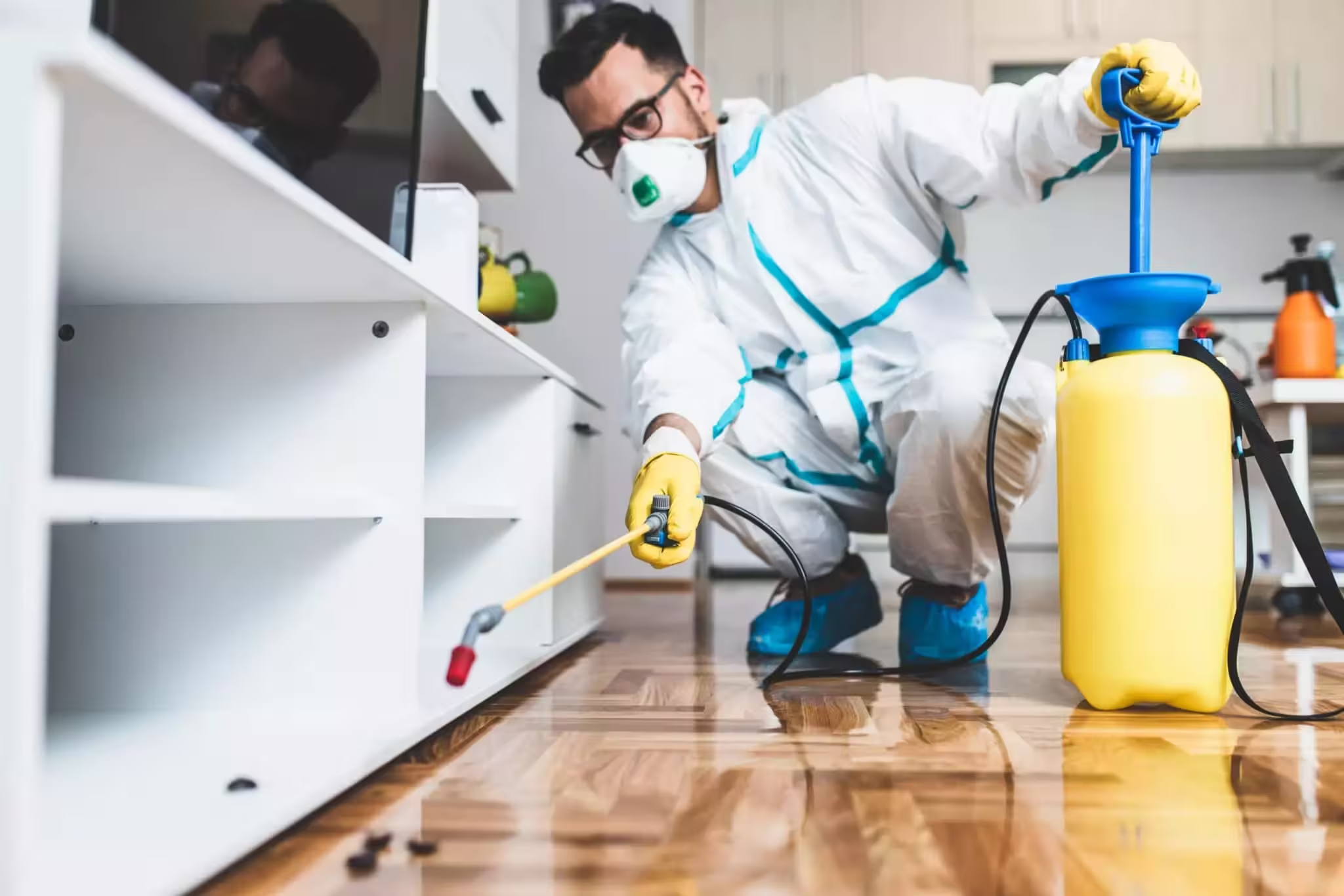
Pest Control Services
Perfect Solution Contracting provides pest control support as part of integrated facility management for commercial, administrative, government, residential, industrial, and other managed facilities.
Effective pest management involves more than responding to visible insects or rodents. A structured programme considers pest identification, inspection, monitoring, sanitation conditions, access points, food and water sources, harbourage areas, environmental conditions, treatment requirements, and follow-up actions.
Our approach can incorporate Integrated Pest Management (IPM) principles, combining preventive measures, monitoring, physical controls, housekeeping coordination, exclusion measures, and targeted treatments where appropriate.
Pest-control activities should be performed by suitably qualified and authorised personnel where required, using approved products and application methods in accordance with applicable requirements, manufacturer instructions, site procedures, and the agreed scope of service.
Integrated Pest Management
Integrated Pest Management (IPM) is a systematic approach that focuses on understanding pest activity and addressing the conditions that allow pests to enter, survive, and reproduce within a facility.
The programme can combine inspection, monitoring, sanitation, exclusion, environmental controls, mechanical methods, and carefully selected treatments based on the identified pest and site conditions.
Pest Inspection
Inspection is an important first step in establishing an appropriate pest-control programme.
Inspections can cover internal and external areas, service rooms, kitchens, pantries, waste areas, drainage locations, storage areas, landscaping, building perimeters, utility penetrations, and other locations where pest activity may occur.
Pest Identification
Correct identification helps determine appropriate monitoring, prevention, and treatment methods.
Different insects, rodents, and other pests have different behaviours, habitats, food sources, breeding patterns, and treatment requirements. Control measures should therefore be selected for the specific pest rather than applying one method to every situation.
Pest Activity Assessment
Evidence of pest activity can include sightings, droppings, nesting material, feeding damage, tracks, odours, insect remains, damaged packaging, or activity recorded through monitoring devices.
The location and frequency of these observations can help determine the extent of the problem and identify areas requiring additional inspection or corrective action.
Pest Monitoring
Monitoring can help identify pest activity before it develops into a larger facility-management issue.
Monitoring methods depend on the target pest and can include visual inspections, suitable traps, monitoring stations, insect monitoring devices, activity records, and trend analysis.
Rodent Control
Rodent-management programmes can include inspection, monitoring, identification of entry points, sanitation recommendations, exclusion measures, trapping, and other approved control methods.
Rodent-control devices should be positioned and managed according to the site environment, identified activity, safety considerations, and the selected pest-management programme.
Rodent Monitoring Stations
Where appropriate, monitoring or control stations can be positioned around selected internal or external locations based on risk and pest activity.
Stations should be inspected at suitable intervals and their condition, activity, and required corrective actions documented as part of the pest-control records.
Crawling Insect Control
Crawling insects can include cockroaches, ants, and other pests that enter or establish activity within buildings.
Control measures can include inspection, monitoring, cleaning recommendations, sealing of suitable entry points, moisture management, removal of food sources, and targeted treatment where required.
Cockroach Control
Cockroach activity can be associated with food sources, water, warm concealed spaces, drainage systems, equipment areas, storage conditions, and building penetrations.
Management can include detailed inspection, monitoring, sanitation improvements, treatment of identified harbourage areas, and follow-up inspections to assess continuing activity.
Ant Control
Ant-control programmes should consider the species where identifiable, activity routes, nesting areas, food and moisture sources, and entry points.
Treatment methods can vary depending on whether activity originates inside the building, around the external perimeter, within landscaping, or from another source.
Flying Insect Control
Flying insects can require a combination of prevention, monitoring, housekeeping, waste management, drainage maintenance, physical barriers, and approved control measures.
The appropriate strategy depends on the type of insect, source of activity, building use, environmental conditions, and sensitivity of the affected area.
Fly Management
Fly activity can be associated with waste, food residues, drainage systems, organic material, external conditions, open doors, or other attractants.
Control measures should therefore address the source as well as visible adult insect activity.
Mosquito Management
Mosquito-management activities can include inspection for standing water and potential breeding areas, environmental recommendations, monitoring, and appropriate control measures where required.
Particular attention can be given to landscaping, drainage areas, containers, water accumulation, and other locations capable of retaining water.
Stored-Product Pest Monitoring
Stores, pantries, kitchens, and food-storage areas can experience pest activity associated with dry food products or contaminated packaging.
Management can include stock inspection, storage practices, cleaning, removal of affected materials, monitoring, and appropriate treatment according to the environment and applicable requirements.
Building Perimeter Inspection
External building conditions can significantly influence pest activity inside a facility.
Perimeter inspections can review doors, openings, utility penetrations, drainage points, landscaping, waste areas, external storage, wall interfaces, and other potential pest entry or harbourage locations.
Pest Exclusion
Exclusion focuses on reducing opportunities for pests to enter buildings.
Recommendations can include sealing suitable gaps, repairing damaged screens, improving door sealing, addressing service penetrations, and coordinating other building repairs where pest access has been identified.
Door & Opening Inspection
Gaps around doors, damaged seals, frequently open entrances, loading areas, and other openings can provide pest access to a facility.
Identified defects can be referred to the appropriate facility-maintenance team for repair or modification where necessary.
Service Penetrations
Openings around pipes, conduits, cables, ducts, and other building services can create potential pest pathways between external areas and internal spaces.
Suitable sealing or repair should be coordinated with the relevant MEP, fire-stopping, architectural, or maintenance requirements before work is completed.
Drainage Areas
Floor drains, drainage channels, manholes, grease-related areas, and other drainage components can contribute to certain pest problems if maintenance or cleaning conditions are inadequate.
Pest-control teams can coordinate observations with plumbing, drainage, housekeeping, and facility maintenance teams where corrective action is required.
Waste Area Management
Waste accumulation and poorly managed waste areas can provide food and harbourage for insects and rodents.
Pest prevention can therefore include coordination of waste removal frequency, container condition, cleaning, waste-area housekeeping, and correction of identified access points.
Housekeeping Coordination
Housekeeping plays an important role in pest prevention because food residues, spills, clutter, standing water, and waste can support pest activity.
Pest-control observations can be shared with housekeeping supervisors so that relevant sanitation or cleaning issues can be addressed through the appropriate facility-management process.
Food & Pantry Areas
Kitchens, pantries, dining areas, vending locations, and food-storage areas can require increased attention because they provide potential food and water sources.
Inspection can consider cleaning standards, food storage, waste handling, drains, equipment spaces, cracks, openings, and evidence of pest activity.
Storage Areas
Storage areas can provide concealed harbourage, particularly where materials remain undisturbed for long periods or where housekeeping and stock rotation are limited.
Good storage practices, appropriate clearance, inspection access, stock rotation, and routine housekeeping can support pest prevention.
Landscaping Coordination
Vegetation, irrigation, standing water, organic debris, and landscaping close to buildings can influence pest activity.
Pest-control observations can therefore be coordinated with landscaping teams to address relevant vegetation, irrigation, drainage, or housekeeping conditions.
Moisture & Water Sources
Plumbing leaks, condensation, standing water, defective drainage, and irrigation problems can provide moisture that supports certain pests.
Identified water-related defects should be reported to the relevant plumbing, HVAC, landscaping, or maintenance team for technical investigation and corrective action.
Preventive Pest Control
Preventive pest management focuses on reducing the conditions that encourage pest entry and activity before a significant problem develops.
This can include routine inspections, monitoring, exclusion recommendations, sanitation coordination, waste management, moisture control, landscaping coordination, and scheduled treatment where appropriate.
Scheduled Pest-Control Visits
Pest-control visits can be scheduled according to the building type, pest risk, operating environment, historical activity, season, contract requirements, and results of previous inspections.
The appropriate service frequency should be determined for the specific facility rather than applying the same schedule to every building.
Reactive Pest-Control Response
Occupants or facility teams may report unexpected pest sightings between scheduled service visits.
Reactive response can include inspection, identification of the reported pest where possible, assessment of the affected area, appropriate treatment, and follow-up actions based on the findings.
Targeted Treatment
Treatment should be selected according to the identified pest, level of activity, affected location, occupancy, environmental conditions, and other relevant site factors.
Targeted treatment can help limit unnecessary application while focusing control measures on identified pest activity and harbourage areas.
Chemical Treatment
Where chemical pest-control products are required, their selection and application should follow applicable requirements, product labels, safety information, approved procedures, and manufacturer instructions.
Chemical treatment should not be treated as the only pest-management method when sanitation, exclusion, moisture, waste, or building-maintenance conditions are contributing to the problem.
Gel & Bait Applications
Baits or gel formulations may be appropriate for selected pests and locations depending on the pest, environment, product approval, and treatment strategy.
Placement should consider pest activity, access, potential disturbance, occupant safety, cleaning activities, and product-specific requirements.
Trapping Methods
Traps can be used for monitoring or control depending on the target pest and selected management programme.
Devices should be selected, positioned, inspected, and maintained appropriately for the facility and should not create unnecessary risks to occupants or other building users.
Sensitive Areas
Certain locations may require additional controls due to their function, occupants, equipment, products, or operational sensitivity.
Treatment planning should consider the specific restrictions and requirements of the area before any pest-control activity is performed.
Occupied Facilities
Pest-control work in occupied facilities should be coordinated to minimise unnecessary disruption and exposure to building users.
Treatment timing, access restrictions, area isolation, ventilation requirements, re-entry conditions, and communication should follow the applicable product, safety, site, and operational requirements.
Pest Control in Technical Areas
Electrical rooms, data rooms, mechanical spaces, and other technical areas can require special consideration because inappropriate treatment methods may affect sensitive equipment or facility operations.
Pest-control activities in these areas should be coordinated with the responsible technical team and use methods appropriate to the environment.
Health, Safety & Environmental Controls
Pest-control activities can involve chemical products, application equipment, traps, ladders, restricted areas, waste handling, and other potential hazards.
Appropriate risk assessment, personal protective equipment, safe handling, storage, application, signage, access control, and emergency procedures should be implemented according to the activity and product requirements.
Product Safety Information
Pest-control products should be supported by appropriate technical and safety information and used only for suitable applications.
Product instructions, dilution or application requirements, restrictions, storage conditions, and other safety information should be followed by the responsible personnel.
Treatment Area Coordination
Some treatments may require temporary control of access to the affected area.
Where applicable, treatment areas can be coordinated with facility management, occupants, security, housekeeping, and other responsible teams before and after the service.
Pest-Control Records
Service records provide useful information about pest activity and the actions completed at each visit.
Records can include inspection date, location, pest observations, monitoring results, treatment performed, products used where applicable, recommendations, corrective actions, and follow-up requirements.
Pest Activity Trending
Reviewing pest-control records over time can help identify recurring activity, seasonal patterns, high-risk areas, and locations where additional preventive measures may be required.
Trend analysis can also support decisions regarding housekeeping, waste management, building repairs, drainage, landscaping, or treatment frequency.
Corrective Action Tracking
Pest inspections can identify facility defects or operational conditions that require action by teams outside the pest-control scope.
Examples include damaged door seals, plumbing leaks, drainage problems, wall openings, housekeeping issues, waste accumulation, or landscaping conditions.
Follow-Up Inspections
Follow-up inspection can be important after treatment or corrective action to determine whether pest activity has reduced and whether additional measures are required.
Follow-up frequency depends on the pest, severity, treatment method, environment, and facility requirements.
Facility Management Coordination
Pest problems often involve conditions managed by multiple facility-management functions rather than the pest-control team alone.
Coordination may involve housekeeping, waste management, plumbing, drainage, HVAC, civil maintenance, landscaping, security, stores, and building management.
CAFM & CMMS Integration
Pest sightings, inspection findings, treatment visits, and corrective actions can be recorded through Computer-Aided Facility Management (CAFM) or Computerised Maintenance Management Systems (CMMS) where these platforms are used.
This can support service-request tracking, scheduled activities, follow-up work orders, maintenance coordination, and reporting.
Service Requests
Facility users can report pest sightings through the approved helpdesk or service-request process.
Useful information can include the location, date, approximate time, pest description, frequency of sightings, and any photographs or other observations available.
Pest-Control Reporting
Periodic reports can summarise inspections, pest activity, treatments, monitoring results, recurring locations, recommendations, corrective actions, and outstanding facility issues.
Reporting can be adapted to the agreed service scope and facility-management requirements.
Pest Control Service Scope
- Integrated Pest Management support
- Pest inspections
- Pest identification
- Pest activity assessment
- Routine pest monitoring
- Rodent control
- Rodent monitoring stations
- Crawling insect control
- Cockroach control
- Ant control
- Flying insect control
- Fly management
- Mosquito-management support
- Stored-product pest monitoring
- Building perimeter inspections
- Pest-exclusion recommendations
- Entry-point identification
- Drainage-area inspections
- Waste-area inspections
- Housekeeping coordination
- Food and pantry area inspections
- Storage-area inspections
- Landscaping coordination
- Moisture-source identification
- Preventive pest-control programmes
- Scheduled pest-control visits
- Reactive pest-control response
- Targeted treatment
- Approved treatment methods
- Bait and gel applications where appropriate
- Trapping and monitoring methods
- Sensitive-area coordination
- Occupied-facility coordination
- HSE controls
- Treatment records
- Pest activity trending
- Corrective-action tracking
- Follow-up inspections
- CAFM and CMMS integration
- Service-request management
- Pest-control reporting
Integrated Pest Management for Facilities
Effective pest management requires coordination between pest-control activities and the wider facility operation. Cleaning standards, waste handling, drainage, plumbing, landscaping, storage practices, building maintenance, and occupant behaviour can all influence pest activity.
Perfect Solution Contracting provides coordinated pest management support as part of facility-management services, combining inspection, monitoring, preventive measures, targeted control, corrective-action coordination, follow-up, and reporting according to the approved service scope and site requirements.